Loading cart

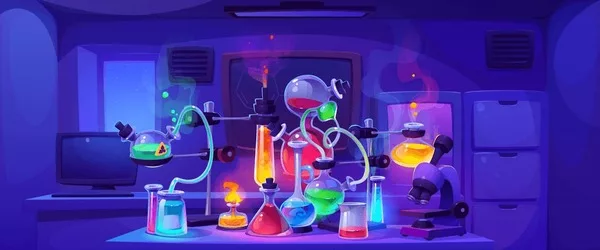
It’s a question that keeps coming up across forums and search engines: can you actually make homemade poppers? The short answer is yes, technically. The full answer is far less appealing: between the chemical risks, the legal grey areas, and the poor quality of the end result, DIY poppers have nothing in common with a properly formulated, professional product. Here’s why.
1. What exactly are poppers?
Poppers is the common name for a family of aromas based on organic nitrites — most commonly pentyl nitrite (also known as amyl nitrite), propyl nitrite, or butyl nitrite. These compounds are powerful vasodilators: when inhaled briefly, they cause muscle relaxation, a short-lived head rush, and increased blood flow.
In the UK and across most of the EU, poppers based on pentyl nitrite are sold legally as room aromas or leather cleaners, a legal classification that has held up following several legal challenges over the years (notably the 2013 French Conseil d’État ruling, which struck down an earlier ban on pentyl-based products). The legitimate market is well established and subject to quality standards.
⚠️ Important: Not all nitrites are equal. The exact composition, purity, and packaging of a product directly determine how safe and effective it is.
2. Can you really make poppers at home?
On paper, the synthesis of organic nitrites is a well-documented chemical reaction. It typically involves reacting an alcohol (pentanol, propanol, etc.) with a nitrosating agent under acidic conditions — basic organic chemistry, the kind covered in an undergraduate lab course.
In practice, that means you’d need to:
- Source controlled reagents (sodium nitrite, nitric acid, etc.), some of which are restricted substances in the UK and EU;
- Have access to proper laboratory equipment (flasks, condensers, precision thermometers);
- Control reaction conditions (temperature, pH, timing) with real precision;
- Purify the final product through distillation to remove toxic by-products.
Without all of that, what you end up with isn’t poppers — it’s an unstable, potentially hazardous mixture.
3. The chemical risks of homemade poppers
This is where things get serious. Here are the main dangers of DIY poppers:
🔥 Fire and explosion risk
Organic nitrites are highly volatile and extremely flammable. Their flash point is low (roughly 0–10°C depending on the molecule). Handling them without a fume hood, without temperature control, or anywhere near an open flame can lead to ignition — or, in the worst case, an explosion.
☠️ Toxic by-products
An uncontrolled synthesis inevitably produces unwanted by-products: highly toxic nitrites, nitrogen oxides, and nitrated compounds with possible carcinogenic properties. Without fractional distillation to purify the mixture, these impurities end up in the final product.
🚨 Immediate danger: Inhaling a contaminated batch can cause severe respiratory irritation, intense headaches, a sharp drop in blood pressure, or even methemoglobinemia — a serious blood disorder that requires urgent medical treatment.
🧪 Product instability
Nitrites degrade quickly when exposed to air and heat. A poorly stabilised or poorly packaged product can break down within hours, releasing toxic gases (NO, NO₂). Professional manufacturers use airtight packaging and stabilising agents specifically to prevent this.
| Criteria | Homemade poppers | Professional product |
|---|---|---|
| Purity of the active compound | Unknown, inconsistent | Lab-tested and controlled |
| By-products | Likely present | Removed through purification |
| Stability | Low to very low | Guaranteed by packaging |
| Explosion risk | Real, during synthesis | None (stable finished product) |
| Respiratory irritation | High | Minimised (optimised formula) |
| Traceability | None | Batch, composition, date |
4. The legal side: where things stand in the UK and EU
Beyond the physical risks, making poppers at home raises a number of legal issues:
- Restricted precursor chemicals: Sodium nitrite and certain alcohols used in the synthesis are classified as restricted substances under explosives precursor regulations (Regulation (EU) 2019/1148, retained in UK law post-Brexit). Buying these in quantity as a private individual can raise red flags.
- No legal status for the finished product: A home-synthesised pentyl nitrite has no clear legal classification. It’s not a medicine, not a food product, not a registered aroma. Possessing or distributing it — even for free — sits in a legal grey area.
- Liability in case of an accident: If a homemade product injures someone else, the person who made it can be held liable.
The legitimate poppers market in the UK and EU consists exclusively of commercially formulated pentyl nitrite-based aromas, sold by established suppliers. There is no legal framework for amateur production.
5. Why professional-grade quality makes all the difference
A good popper isn’t just about the active molecule. Professional manufacturers work on several factors that a homemade batch simply cannot replicate:
- Nitrite purity: A purity level above 95% is needed for a clean effect, free from irritation or headaches. That requires professional vacuum distillation.
- Blended formulas: Some aromas combine multiple nitrites (e.g. pentyl + propyl) to adjust the intensity and duration of the effect — the result of years of formulation work.
- Airtight packaging: Amber glass bottles with tamper-proof caps slow down oxidation and preserve potency until the expiry date.
- Traceability: Every batch is identifiable. If something goes wrong, a recall is possible — something that’s simply not the case for a homemade product.
6. Our range: the real alternative to homemade poppers
Looking for something effective, safe, and legal? Our selection at Poppers-Achat features the best brands on the market, formulated with pure pentyl nitrite or premium blends, professionally packaged and shipped discreetly across the UK and Europe.
Our best-sellers:
- Jungle Juice Platinum — The global benchmark, high-purity pentyl nitrite
- Rush Original — Classic formula, immediate and intense effect
- Iron Horse — Pentyl/propyl blend for a longer-lasting experience
- Amsterdam — A milder aroma, ideal for beginners
🛒 Browse our range of professional-grade poppers
Fast, discreet shipping · Secure payment · Fully legal across the UK and EU
7. FAQ – Frequently asked questions about homemade poppers
Is it illegal to make poppers at home?
There’s no law that explicitly bans private nitrite synthesis, but acquiring the chemical precursors involved is regulated under explosives precursor legislation. On top of that, distributing or selling the finished product would amount to undeclared commercial activity. In practice, the legal risks are real.
Can you find a homemade poppers recipe online?
General chemical procedures can be found in organic chemistry textbooks. However, applying them without proper lab equipment and expertise is dangerous. The safety conditions required — ventilation, temperature control, purification — simply can’t be replicated at home.
Are shop-bought poppers really different from a homemade product?
Yes, significantly. A professional product guarantees controlled purity, no toxic by-products, stability over its shelf life, and appropriate packaging. These are standards that simply can’t be met with a DIY synthesis.
What’s the best poppers brand to buy instead of making my own?
It depends on what you’re after: strong intensity (Jungle Juice Platinum, Rush Original), a milder effect (Amsterdam), or a longer-lasting experience (Iron Horse). Check out our full comparison guide on Poppers-Achat.
Are poppers legal in the UK?
Yes. Pentyl nitrite-based poppers are sold legally in the UK as room aromas, and are not classified as psychoactive substances under current legislation. They’re subject to the same consumer chemical product standards as other household aromas.
Conclusion
Homemade poppers might sound like an appealing DIY project, but the reality is far less convincing: serious chemical hazards, legal grey areas, and a finished product that falls well short of even the most basic professional blend. Synthesising organic nitrites isn’t a casual weekend project — it’s a delicate chemical process that belongs in a lab, not a kitchen.
The good news? Dozens of properly formulated, lab-tested products are available legally across the UK and EU at accessible prices. There’s simply no good reason to take the risk.